


A new study taken ahead of the 2026 FIFA World Cup has revealed that nearly half of US users do not trust betting platforms, like prediction markets, but nearly one-in-five intend to engage in event contracts this summer anyway.
Users fear security failures while betting during major events
The survey, led by AI fraud prevention company SEON, evaluated preferences among 588 individuals across a broad spectrum of topics related to prediction markets, including their perceived viability against traditional sportsbooks.
Over half (56%) of survey respondents confirmed that they plan to watch this summer's World Cup, which will take place across the US, Canada and Mexico.
Of those asked, 45% expressed distrust in online betting platforms during "high-traffic events." Specifically, users described security concerns related to personal and financial information.
Yet, an almost equal proportion (43%) said they would probably bet on World Cup fixtures.
According to SEON, this data showcases a disconnect between user trust and how much an individual is prepared to spend during major events.
Prediction platforms now second favorite betting option among US users
Despite vehement security concerns, nearly one-in-five (19%) users verified that they planned to use prediction platforms for online betting - placing prediction markets as the second most popular choice overall, trailing only traditional sportsbooks (29%).
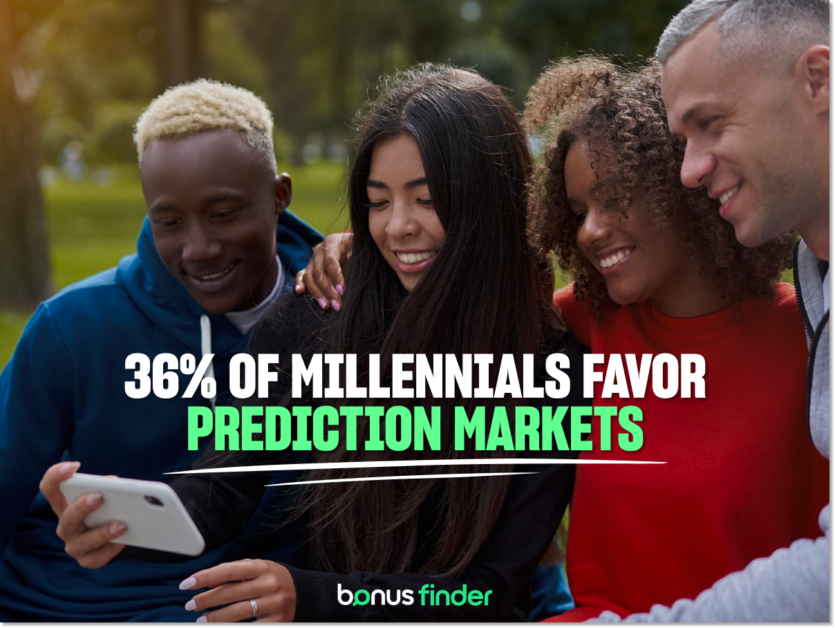
In particular, millennials represent the likeliest cohort to use prediction platforms; 36% of those born between 1981 and 1996 stated that they are ready to trade on sports derivatives throughout the summer soccer tournament.
This is especially notable due to 38% of respondents from the same age group viewing traditional sportsbooks as their go-to betting vertical.
For all age groups, social casinos (17%), cryptocurrency-focused betting sites (8%) and unregulated offshore platforms (8%) sit next in line in terms of holistic popularity.
Again, SEON believes these findings point to younger users being more malleable when it comes to switching between new platforms - a behavior accelerating traction among trading operators during noteworthy sporting events.
For the lead product marketing manager for betting and gaming at SEON, George Pace, the explanation behind prediction market success is clear: "Prediction markets let consumers put money behind what they think they know," explained Pace.
Speaking to Gambling Insider, Pace stated that the "continuous news cycle" associated with the World Cup drives an uptick in total possible outcomes, producing increased engagement.
Bonus fraud a significant concern for all platforms
When asked about motivating factors for joining a new betting platform, 36% of survey respondents marked free bets as the most attractive promotional variant.
User-accessibility and ease of use followed, at 31%, while 27% of all users view odds value as the prevailing element.
However, demand for bonuses - and the constant publishing of new offers from operators – has generated a critical problem for betting sites: promotion fraud.
As outlined in SEON's analysis, 22% of those studied said they have previously created multiple accounts to claim promotions with an operator with whom they already wager. Moreover, 17% admitted to using a friend or family member's account in order to access bonuses exclusive to new customers.
Promotional content may represent the most important feature for operators seeking to onboard new users - but this data suggests bonuses also serve as the most damaging aspect for modern platforms.
Worse, SEON details that bonus fraud in its contemporary guise is becoming increasingly easy to commit, yet more difficult to stamp out.
User trust tightly associated with age
Millennials also stand as the generation most likely to participate in World Cup wagering, with 65% planning to bet on soccer outcomes from June to July, 2026. Just 24% of millennial respondents do not expect to wager during the competition - the lowest observed percentage of all groups.
By contrast, says Pace, 28% of Gen Z users do not interact with sports gambling. Engagement drops across older generations, too, as 56% of Gen X and 70% of Baby Boomers refrain from betting.
Perhaps most pertinent is that 77% of millennials asked are "very or extremely confident" that sports betting platforms are wholly trustworthy, veering away from other, more skeptical demographics.
For a generation that Pace believes already manages "most of their financial lives through apps," a strong inclination toward mobile-based gambling is only natural.
But such substantial confidence has created room for hazardous and potentially risky behavior. In SEON's study, the firm describes millennials as the most likely group to carry out the following:
- Multiple accounts: Up to 38% of millennials admitted to creating more than one account with the same platform.
- Sharing private information: 29% of millennials have openly shared personal details to access promotions.
- Platform access: Prediction markets (36%), social casinos (33%) and crypto-based platforms (16%) represent a significant portion of millennial's interactivity with gambling platforms.
It is worth noting that male users are more likely to wager on the World Cup than women (49% to 35%), with almost half (44%) believing gambling platforms will protect their data. Female users remain more cautious, according to SEON's report; just 25% believe gambling operators provide adequate data security.
Younger users "disproportionately" impacted by scams
SEON's report revealed that 24% of respondents encountered social media scams tied to the World Cup in the weeks leading up to the tournament, with 20% seeing fake ticket advertisements and 18% viewing black-hat gambling operators.
The study lifted the lid on Gen Z being a focused target of these malicious firms - 38% have personally come across World Cup-adjacent online scams, while one-third of users have opened links attached to fraudulent products or services.
Both exposure and "willingness to click" are highlighted as prominent reasons explaining this coercive effect on younger users.
Having assimilated this data ahead of a tournament that is expected to place huge pressure on gambling operators, SEON President for GTM, Matt DeLauro anticipates a challenging period of "high-volume, low trust and blurred intent," where platform-holders will find it increasingly difficult to separate genuine consumers from potentially coordinated fraud.