
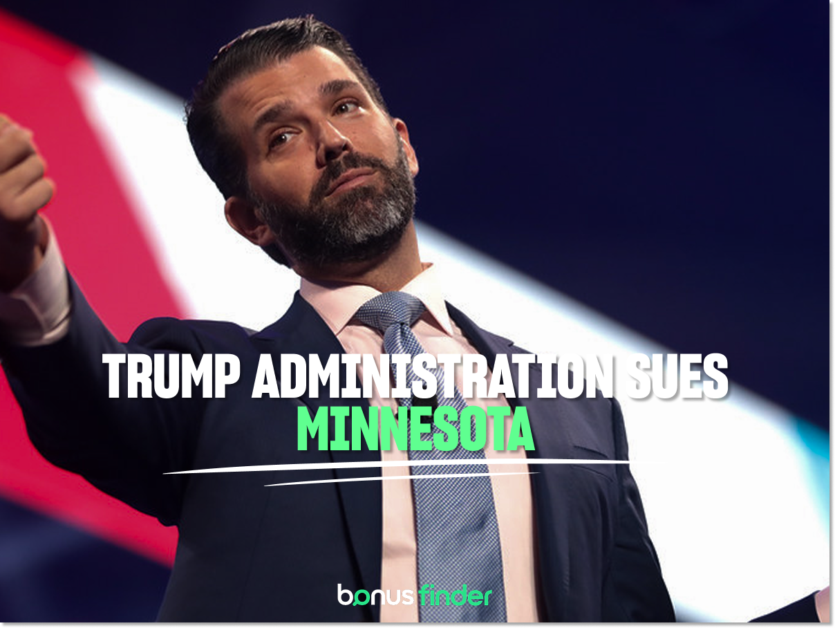

Minnesota was sued by the Trump administration on Tuesday, May 20 after a state law was passed to ban prediction markets in the jurisdiction.
The legislation, which is the first of its kind in the US to ban prediction markets and due to go into effect on August 1, restricts wagering on prediction markets and also makes it a felony to create, operate or advertise the platforms in the state.
The CFTC's battle with regulating prediction markets
Minnesota's district court received a lawsuit filed by the Commodity Futures Trading Commission (CFTC), a federal agency, arguing that the new bill is a "flagrant and unprecedented incursion" into its regulatory authority.
The CFTC has asserted in court battles in other states that it has "exclusive jurisdiction" over prediction markets under federal law, which it argues states cannot override.
In a statement, the CFTC said: "The CFTC is seeking a preliminary injunction to stop the law in Minnesota that would make operating or assisting in the operation of a prediction market a criminal felony from going into effect on August 1, 2026.
"The new legislation represents the most aggressive move by a state to shut down CFTC-regulated markets and undermine the federal regulatory regime set up by Congress more than 50 years ago."
CFTC Chairman Michael Selig added: "This Minnesota law turns lawful operators and participants in prediction markets into felons overnight."
The Trumps family's ties to prediction markets
President Donald Trump's son, Donald Trump Jr., is a strategic advisor for both Polymarket & Kalshi - the two biggest prediction market providers worldwide - and has also invested in Polymarket via his venture capital firm.
One thing for certain is that the cash flow to prediction markets is enormous and is growing at an exponential rate. According to TRM Labs, in early 2025, the monthly trading average was around $1.2B, now that amount often exceeds $20B.
The ongoing prediction markets = gambling debate ensues
However, CFTC is likely to face the Minnesota state attorney in court, something they argue is their domain. Currently, gambling and sports betting can be regulated by states, which they argue falls into the category of prediction markets.
Minnesota attorney general Keith Ellison said his office is reviewing the lawsuit and will "respond in court." However, he did add in his statement that he's "very concerned" about the harms of prediction markets on Minnesotans:
"Prediction markets are designed to be addictive and prey especially on young people and low-income folks. They help the ultra-rich get richer and the rest of us get poorer."
The state, which only allows gambling at horse races and tribal casinos, has become the latest Democrat-led state that has faced legal action from the CFTC. Arizona, Connecticut, Illinois, New York and Wisconsin have all challenged prediction markets which, currently, can operate in all 50 states.
With legal challenges expanding across multiple US states, the battle between federal and state authority over prediction markets seems far from over.