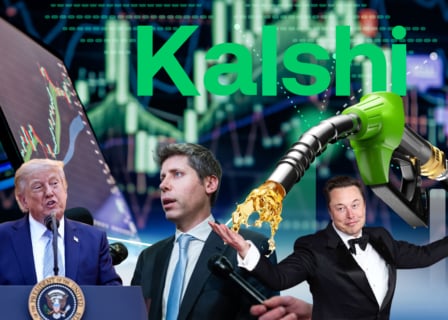
Prediction markets have once again come under fire for facilitating insider trading, after the US strikes on Iran at the weekend. Questions have also been raised regarding the legality of some markets – in particular, regarding the regulation of contracts related to war and deaths.
The US and Israel launched an aerial offensive against Iran on Saturday with the stated aim to "remove threats".
One of the first attacks was near the Supreme Leader Ayatollah Ali Khamenei's offices and, later in the day, President Donald Trump confirmed the Ayatollah had died during the day's offensive.
Meanwhile, in the hours before the strike, prediction markets Kalshi and Polymarket took an unprecedentedly large volume of purchases on related contracts.
In particular, one Polymarket user, named Magamyman on the platform, walked away with $700,000 from related trades – a hugely significant amount on a political event that would typically see minimal contracts.
Insider trading accusations
The CFTC, which has recently claimed jurisdiction over prediction markets in the US, published a targeted reminder just days before the recent strike.
It said that it had the power to police prediction markets and to take action against suspected insider trading.
Democrats clearly also believe the recent trades were insider trading.
Rep. Mike Levin posted on X: "When this person bought in, the market had this at a 17% probability. They turned roughly $87,000 into over half a million dollars overnight.
"Prediction markets cannot be a vehicle for profiting off advance knowledge of military action. We need answers, transparency, and oversight."
Senator Chris Murphy agreed, also taking to X, to write: "It's insane this is legal. People around Trump are profiting off war and death. I'm introducing legislation ASAP to ban this."
Ethic questions...
Six new accounts made more than $1.2m betting that the US would strike Iran, which has raised additional questions over the legality of such markets. US-based prediction markets are not allowed to offer trades that are based on deaths.
Prediction markets saw similar ethical questions in January. An anonymous trader pocketed more than $400,000 when Venezuelan President Nicolas Maduro was taken into US custody. Most of the bids were made just hours before the nighttime capture.
Kalshi has updated its terms and conditions relating to insider trading. The prediction site states: "Does trading on material non-public information in prediction markets expose you to insider trading or fraud liability? And the answer is clear: yes, it does."
The rise of prediction markets
Trading platforms rose to prominence in 2024, when they accurately predicted the outcome of the US election. While they are treated as gambling in a lot of markets, the US considers them trading platforms. This has helped them circumvent strict gambling laws that exist in many states.
The platforms also offer a more simplistic user interface and layout compared to traditional betting platforms.
And, where many traditional platforms shy away from offering bets on political disputes, prediction platforms have been shown to offer contracts on wide-ranging, often highly controversial markets.