
Online payments platform Paysafe has released a new transactional report ahead of the 2026 FIFA World Cup, with responses from 3,850 users generating pertinent data for sportsbook operators and payment channels.
Titled 'All the Ways Players Pay: World Cup 2026 Edition', this 18-page study lifts the lid on payment preferences among modern users – both at home and while attending games - and describes crucial factors contributing to betting intentions, such as community and momentum.
In an op-ed published on SBC Americas, Paysafe's President of Global Gaming, Zak Cutler branded the 2026 World Cup, which will be hosted by the US, Canada and Mexico, as an "indisputable opportunity for sportsbooks" to deepen ties with existing users and forge new relationships with first-time users.
Nearly 30% of US users will be first-time bettors
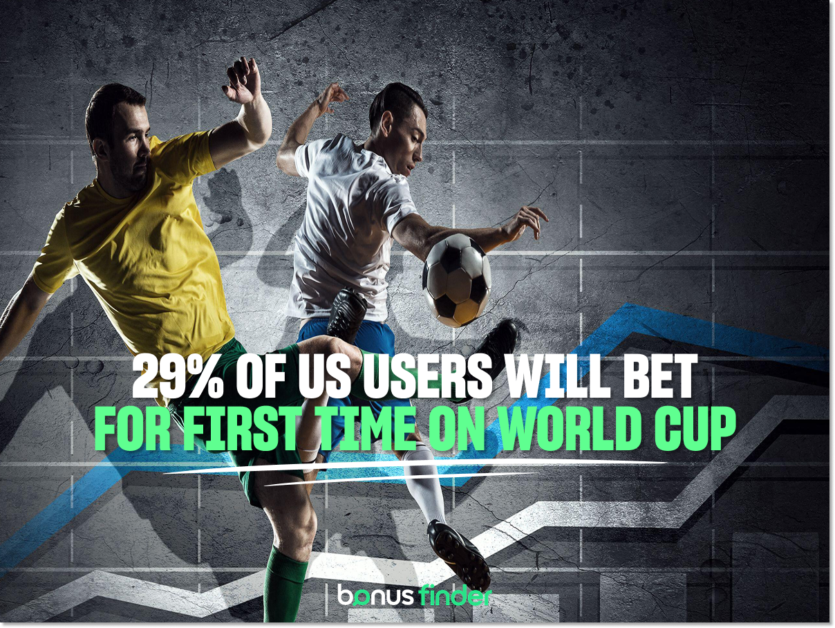
As outlined by Cutler, data from The Economist suggests that soccer (10%) has overtaken baseball (9%) and hockey (4%) in terms of gambling market share. That coverage is expected to expand this summer and, according to Paysafe, up to 29% of US users will engage in sports betting for the first time during the World Cup.
New York represents a hotbed of new user acquisitions for sportsbooks; 47% of New York-based respondents said that they intend to use sports betting markets between June 11 and July 19, 2026.
Figures for the same metric also remained strong in Kansas (31%) and New Jersey (28%).
Perhaps most striking is this: when asked whether they intended to engage in World Cup wagering, 49% of users who do not typically follow soccer confirmed that they planned to bet at some point in the summer tournament.
If Paysafe's findings are accurate, around 41% of individuals wagering with sportsbooks this summer will constitute returning customers.
On a wider scale, 60% of all respondents outlined an intention to bet on the World Cup. Meanwhile, 40% stated that they will not participate in online sports betting for the competition.
Positive payment experiences are crucial, says data
In its study, Paysafe found that a user's transaction experience can "make or break" whether they opt to return to the platform or seek an alternative operator.
Up to 93% of US survey respondents declared that they would leave a sports betting operator after a negative payment experience. Nearly half (44%) pronounced that they had previously "abandoned a bet" due to their preferred payment options being unavailable.
Quick and easy payments now stands as a deciding factor for 33% of users exploring new sportsbook operators, says Cutler - ranking as the second most important element, only behind brand reputation.
Although odds quality (32%) serves as the next most critical benchmark, users regard frictionless payments (24%) to the same degree they do sign-up offers (24%). The availability of their favorite banking method (20%) represents another priority factor.
Card payments remain the go-to choice for US users
Paysafe's survey asked users to select each payment method they expected to use while funding online sports wagers throughout the World Cup.
In the US, debit cards (50%) and credit cards (54%) garnered the most sizable share, with digital wallets (38%) ranked as the third-favorite option among domestic users. Bank transfers attracted 32% of recorded responses.
Around one-fifth (21%) of survey answerers will continue to use eCash providers, like PaysafeCash – these virtual cash alternatives are especially popular among respondents located in New Jersey (26%) and Florida (27%).
It should be noted that although card payments maintain the largest US audience capture, users are increasingly swayed by methods supporting 'instant' payouts, says Paysafe. The company's data points to 84% of individuals being 'more satisfied' by quick turnaround times for withdrawals.
Momentum key to retention
Customer retention stands as a key hurdle for operators to overcome this summer, and the World Cup will place considerable pressure on sportsbooks plotting to take advantage of North America's hosting via a range of attractive products and services.
An operator's ability to support game-day markets is considered imperative to repeat business; Paysafe found that over half of US users (51%) plan to wager more than usual on the day of the fixture itself, rather than during the days and weeks preceding the event. Only 36% expect to wager at least one day before kick-off.
But a crucial caveat applies; users prefer to place bets up to one hour before the game begins. In its analysis, Paysafe discovered that just 8% of users anticipate placing bets within a few minutes of kick-off. An even smaller proportion (3%) plans to interact with live betting facilities.
More than half of respondents are prepared to wager 'more than usual' compared to their usual betting activity. When evaluating global data, Paysafe perceived that 4% of users are unsure as to their expected betting volume. Likewise, 4% of survey participants forecast placing fewer bets than normal.
Social opportunities also influence wagering interaction, with 60% of those asked affirming that they would be inclined to join a betting pool or pot if such an activity were to be organized by a friend or coworker.
Financial freedom is another central component, as 54% of individuals say they are 'more likely' to partake in sports wagering when they have leftover cash to spend.
Operator performance to transform US betting industry?
In Cutler's view, pivotal questions over the viability of sports betting in the 'American mainstream entertainment' industry could be answered beyond this summer's World Cup.
However, Cutler - who was employed by DraftKings as a product management leader for more than two years - believes much rests on the performance of sportsbook operators and their payment channels.
In particular, transaction platforms and sportsbooks must be prepared to support player engagement during high-stress environments, including seamless in-play wagering and cash out opportunities.
Payment failures during the World Cup could 'risk churn', argues Cutler, at a moment when players are actively looking for their next permanent betting platform.