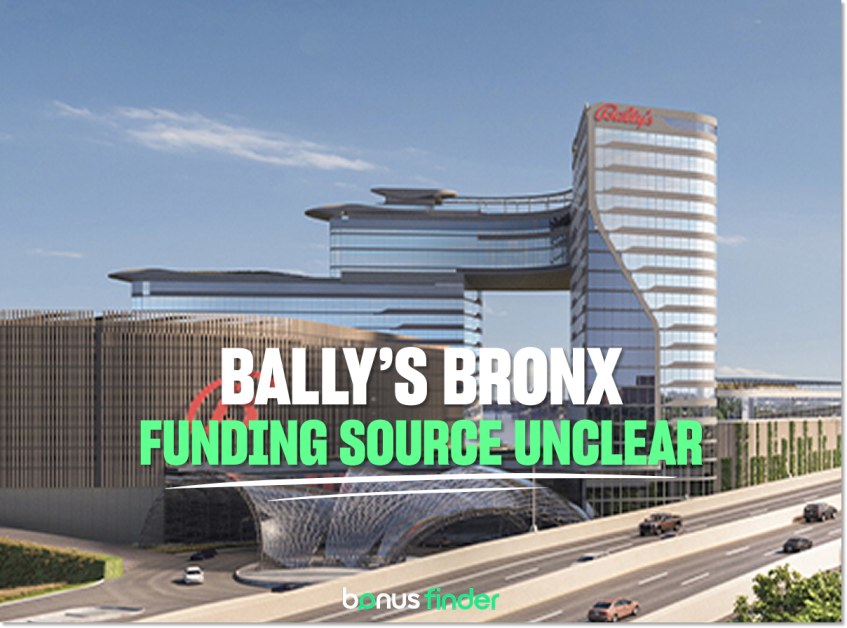

Bally's Bronx became one of three operators to be awarded a New York casino license in December 2025, alongside Resorts World and Hard Rock and Metropolitan Park.
Set for construction at Ferry Point, the new casino is estimated to accumulate a $4bn bill after accounting for material costs, labor and lease agreements.
However, the source of that vital funding has been thrown into question this week, as Gaming and Leisure Properties (GLPI) – a real-estate investment trust (REIT) previously viewed as the majority financial pillar of this project – outlined plans to reassess its financial strategy for the venue.
GLPI seeking financing partner for Bally's Bronx
During an earnings call held on February 20, 2026, GLPI representatives described to shareholders the company's financing vision for Bally's Bronx.
According to GLPI COO Brandon Moore, the Group is actively welcoming capital suitors who may be interested in contributing to the $4bn casino, rather than funding the project independently.
"I think the ability to raise capital unique to the New York project will result in a very competitive field of suitors for capital, and we won't do anything dilutive. So what I think you won't see us do is compete down to a cap rate that's not accretive to GLPI. That won't be of interest to us."
This represents a strict line for GLPI; the organization will only collaborate with funding entities that meet specific, disciplined internal parameters. Firms that may induce uncertain or unhealthy returns will not be considered.
Nevertheless, Moore remains bullish on there being adequate potential investors supporting construction, which is scheduled for completion in 2030.
"Very unlikely" GLPI will cover majority of costs
Although improbable, it is not impossible that GLPI fails to find appropriate funding partners.
Yet, comments by organization members maintain a hard stance. GLPI does not intend to fund the majority of this casino.
Stephen Ladany, GLPI Chief Development Officer, outlined in no uncertain terms his team's strategy moving forward:
"I guess to put it frank, I think to dispel any notions that may exist, we view it very unlikely that we would end up providing the majority of the capital for a $4bn project there. We're going to continue to evaluate the process and the project, and we'll look to try to be as strategic as possible with respect to any involvement."
GLPI eyeing land ownership
Traditionally, REITs purchase land to lease to businesses, who then pay a certain amount of rent over time. That is how financing bodies like GLPI attain consistent cashflow.
The Bally's project presents a key hiccup for GLPI, as the firm intends to buy land covered by the casino:
"I would think that any discussions we have with any of the other parties involved would be under the same type of guise that we have to have a path to owning real estate or a piece of ownership of real estate to start with."
Here's the issue: GLPI would not be purchasing the land from Bally's or any other organization. It would be buying from New York City.
Alternative options are on the table. GLPI could agree to only own the building itself or operate under a ground lease agreement, where part of Bally's lease is extended to GLPI. But outrightly buying the land would prove difficult.
For a team that had planned to begin construction immediately after being awarded a license in 2025, this funding and structural uncertainty stands as a not-insignificant hurdle that must be addressed quickly.
What does GLPI's stance mean for Bally's?
It is important to note that this decision aligns with GLPI's modus operandi.
The Group has long held a collaborative relationship with Bally's, overseeing multiple projects under the operator's retail umbrella. However, this venture is notable due to its sheer size and risk factors.
Moreover, this is a city-owned greenfield operation. Construction has not yet begun and revenue will not be seen for several years. This is the element that drives against GLPI's historical maneuvers.
For example, GLPI announced just this month that it has signed an agreement to purchase the retail assets of Bally's Lincoln Casino Resort in Rhode Island, totaling $700m. This accord builds on an existing framework between the pair – known as the Bally's Master Lease II – and will see Bally's push revenue to GLPI via a rental contract.
It is unlikely that Bally's Bronx will be eligible to enter an identical deal with GLPI as, barring an extraordinary exemption from New York City, the land on which this casino will be built is not privately owned.
This explains why GLPI appears somewhat cautious when it comes to directly funding Bally's Bronx casino development. REIT entities prefer stable income generation over speculative projections when assembling investment schemes.
In short: the more investors GLPI onboards for this project, the smaller the risk. That is the crux of this decision to welcome outside investors.
Will Resorts World and Hard Rock face similar issues?
Unlike Bally's, both Resorts World and Hard Rock at Metropolitan Park benefit from multi-billion-dollar backing from private supporters.
Resorts World in Queens is majority funded by the Genting Group, a Malaysian-headquartered organization overseeing a diverse range of global resorts. There are no reported third-party funding sources involved in the commercial casino's launch, which is set for a phased rollout this year.
Meanwhile, Hard Rock at Metropolitan Park is bankrolled by New York Mets owner Steve Cohen. Like Bally's Bronx, this 'entertainment complex' is due to open in 2030.
The coming months will prove critical for Bally's, as GLPI strives to meet timeline expectations.
When Bally's launches in the Bronx, it will host around 3,500 gaming machines, 250 live tables and a multi-purpose event center, generating up to $1.9bn in state tax revenue.